Phantomatik – Spekulatives, fiktionales und futuristisches Design im Zeitalter des Verschwindens der Technik /von Gregor Sedlag auf dem Raum Schiff Erde 2015

Diese Elemente können im Footer einer Website vorhanden sein:
Thema: Szenografie-Workshop
Eröffnung: 03.Febuar 2015
Ort: Hamburg, Mundsburg
Teilnehmer: 25
Zeitraum: 3 Stunden
Rahmen: Grundklasse Design, Prof. Van Bo Le-Mentzel
Veranstalter: Hochschule für bildende Künste (HFBK)
Projekt-Website: http://aufmerksam-hfbk.tumblr.com
Eine Ausstellung über einen Weg.
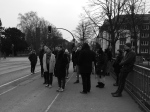
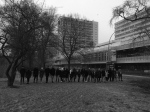
Im Rahmen des Formats „schere.stein.papier. wir verteilen wissen und lernen weiter.“ der Klasse von Van Bo Le-Mentzel ging Sven Klomp mit 25 Studierenden aus den Fachbereichen Design, Innenarchitektur, freie Kunst, Film und Produkt-Design auf eine Wahrnehmungsreise durch das direkte Umfeld der HFBK.
Der Weg führte über Brücken, durch verborgene Gänge und über einen aus Bauschutt entstandenen Berg, dem „Berg der Möglichkeiten“.
Durch angeleitete Interaktionen und Gehmeditationen wurde ein intensiver Bezug zur Umwelt geschaffen.
Der Auftrag war den inneren Fokus zu schärfen und die eigene Wahrnehmung auf Details im urbanen Raum zu richten und zu sammeln.
Gedanken, Geräusche, Erlebnisse, Geschichten, Fotografien, Filme, Zeichnungen und Objekte.
In einer gemeinsamen Ausstellung stellte jeder Teilnehmer sein Exponat und dessen Geschichte vor.




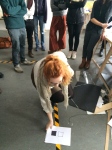


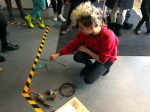

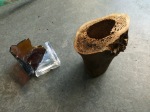




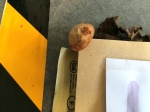


Ich ließ mich treiben wie eine Flasche am Fluss, weswegen ich diese Plastikfalsche, die ich am Berg der Möglichkeiten fand, mitnahm.
Ich hatte keinerlei Erwartungen oder Pläne, an dem Tag wo ich zum ersten Mal in Hamburg ankam.
So war dieser „Spaziergang“ sozusagen eine körperliche Auseinandersetzung, aber auch ein Eingangsritual in Hamburg.
Es ging darum im öffentlichen Raum körperlich und mit den Sinnen sich zu erobern.
Ich beschreibe diesen performativen Momente als „Rituale“, da sie ein Bruch darstellen in der Wahrnehmung des Alltags,
um den eigenen Körper, entkoppelt von sich selbst, als eine Art Medium zu nutzen, dass in den Raum eingreift und sich einen Raum schafft.
Der Moment in dem wir in der Kunstmeile (Mundsburg Center) mit unseren Tönen, ein temporären Raum erschufen,
erinnert mich an die temporären heterotopen* Räume, wie Michel Foucault sie einst beschrieb.
Einer dieser temporären heterotopen Räume sind die Spiele, die Kinder sich ausdenken,
die einen Bruch im Alltag darstellen und auf ein „anderswo“ verweisen.
So stellt auch die Plastikflache, die ein Behälter ist, der entleert und aufgefüllt werden kann, einen veränderbaren und flexiblen Ort dar.
Eine Heterotopie, schon alleine, weil sie ein Behälter ist, der Flüssigkeiten entkoppelt von ihrer Quelle und auf ihre Quelle anderswo verweist.
Insgesamt eine andere Art eine Stadt kennenzulernen.
*Hetero: Anders, Topos: Ort (Ein Ort der anderswo liegt) bsp.: Friedhof, Garten, Hafen, Krankenhaus und Gefängniss
Räume die einen gesonderten Ort in der Stadt haben. Es sind Ort die nicht im Alltag oder im Zentrum der Stadt ein Platz einnehmen, sie sind quasie da, im Bewusstsein der Stadtbewohner, aber liegen außerhalb oder abgeschottet vom Alltag.


„Diesmal haben wir Sven Klomp in Hamburg St. Georg besucht. Sven ist Szenograf und Initiator von “Aufmerksam für das Gewöhnliche”. Wir haben uns eineinhalb Stunden über Szenografie, Museen, Ausstellungsgestaltung und vor allem Räume unterhalten – und am Ende die Aufnahme gestoppt…. App stürzt ab – komplette Aufnahme futsch…. Nach kurzem Schock und Irritation starten wir einfach nochmal durch, und Sven rollt das Gespräch nochmal ganz anders auf und verlegt unser Gespräch einfach in verschiedene Räume im Haus und der Nachbarschaft – eine kleine Reise zum Lastenaufzug, in den tiefen Keller – der szenographischen Gruft auf der Suche nach Excalibur, dem Dom (hier ist die Kirche gemeint!) und die Krypta, und wieder zurück ins Atelier. So haben sich tatsächlich ganz andere Gesprächs- und Erfahrungsräume geöffnet und wir hatten jede Menge Spass und gute Gespräche!“ Hafenradio
Oder
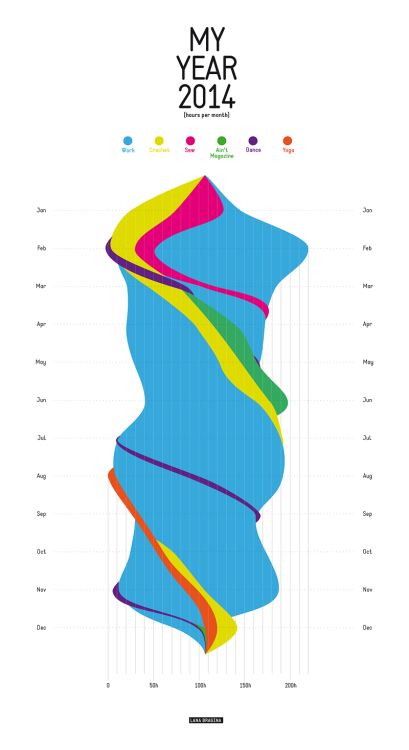
Zusammengestellt von Zitrusfrisch sortiert nach Monaten:
Thema: Urbane Inszenierungen und Szenografie
Eröffnung: 11. November 2014
Ort: Hannover, Expogelände
Teilnehmer: 11
Zeitraum: 7 Veranstaltungen á 3 Stunden
Rahmen: Interdisziplinäre Design-Grundlagen
Veranstalter: Hochschule Hannover, Fakultät III – Medien, Information und Design
Projekt Website: http://aufmerksam-expo2000.tumblr.com
Eine Ausstellung über einen Weg.
Im Rahmen des Studienfachs „Interdisziplinären Designgrundlagen“ der HS Hannover ging Sven Klomp mit 11 Studierenden aus den Fachbereichen Innenarchitektur, Medien-Design, Produkt-Design, Szenografie-Kostüm und Visuelle-Kommunikation auf eine Wahrnehmungsreise durch das ehemalige EXPO Gelände.
Der Weg führte vorbei an brachliegenden EXPO Gebäuden, verborgenen Gängen, Straßenüberführungen und freien Grünflächen. Durch angeleitete Interaktionen und Gehmeditationen wurde ein intensiver Bezug zur Umwelt geschaffen.
Der Auftrag war den inneren Fokus zu schärfen und die eigene Wahrnehmung auf Details im urbanen Raum zu richten. und daraus Inspiration für eine Idee zu entwickeln, die in Form von Gedanken, Geräuschen, Erlebnissen, Geschichten, Fotografien, Filmen, Zeichnungen und Objekten festgehalten wurde. Aus den gesammelten Momenten wählte jede/r Studierende sein intensivstes Erlebnis aus und gestaltete eine freie Arbeit zu seinem gefundenen Impuls. Es entstanden Filme, Fotografien, Installationen, Performances und Videogames.
Die Szenografie bildete das ehemalige Gelände der EXPO2000. Während eines nächtlichen Spaziergangs durch das EXPO Gelände präsentierte jeder Student seine im urbanen Raum inszenierte Arbeit einem externen Publikum und erzählte dessen Geschichte.


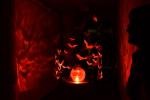


Wanja Neite, Student Szenografie-Kostüm http://finster-finster.tumblr.com
Andreas Weiss, Student Produkt Design http://artefakte-ad-absurdum.tumblr.com
Isabella Rudzki, Studentin Modedesign http://vogelsturm.tumblr.com
Tamara Woehl, Studentin Mediendesign https://www.tumblr.com/blog/nostalgia4thelost
Michael Lorenz, Student Mediendesign http://michadrei.tumblr.com/
Jacqueline Horn, Studentin Innenarchitektur http://aufmerksam-barfuss.tumblr.com/
Prof. Dorothee Weinlich, Interdisziplinäre Design-Grundlagen http://dorothee-w.tumblr.com
Melina Krauß, Studentin Produktdesign http://melouniik.tumblr.com/
Thema: Intuition als Entwurfsstrategie
Datum: 17. Oktober 2014
Ort: Festspielhaus Bregenz, Österreich
Teilnehmer: 20
Zeitraum: 1,5 Stunden
Rahmen: VLOW!14 Festival “Der Einfall – Das Management der Inspiration”
Veranstalter: Kongresskultur Bregenz GmbH
Projekt Website: http://aufmerksam-vlow.tumblr.com
Eine Ausstellung über einen Weg durch Bregenz. Veranstaltet im Rahmen des VLOW!14 Festivals
„Der Einfall, das Management der Inspiration“. Ein Festival im Zwischenraum Kommunikation, Design, Architektur im Festspielhaus Bregenz.
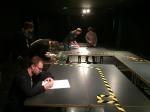
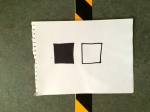
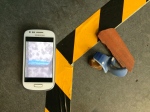
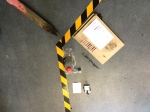
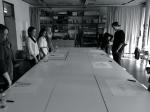
Normalerweise besucht man eine fertig eingerichtete Ausstellung. In diesem Fall, brachten die Teilnehmer die Exponate selbst und erzählten dessen Geschichte. Auf einem Spaziergang durch Bregenz, sammelten sie Erlebnisse und Objekte, machten Fotos und zeichneten. Der Weg führte vom Bregenzer Festspielhaus auf die Seebühne, über die Bahnschienen, vorbei an Parkplatzwelten, durch Unterführungen und verwahrloste Hinterhöfe. Um die Wahrnehmung zu schärfen, wurde während des Gehens nicht gesprochen (aber gelacht) und es gab kleine angeleitete Gehmeditationen. In einem abgedunkelten Konferenzraum des Bregenzer Festspielhauses endete der Spaziergang. Auf mehreren Tischen war mit schwarz-gelben Klebeband eine Linie gezeichnet die den Weg markierte. Nach einer kurzen Einführung, wo sich welcher Platz auf der Linie befand, wählte jeder Teilnehmer sein für ihn stärkstes Ereignis und verortete dieses auf der Linie. In einer gemeinsamen Führung stellte jeder der Teilnehmer sein Exponat und dessen Geschichte vor.