Sound Branding Agencies

Sound Branding Agencies

Originally focused on visual symbols, branding has evolved to include Sound Branding, reflecting a brand’s identity through auditory elements, with more companies adopting this approach and specialised firms emerging.

ai generated, digital, audio-8707111.jpg

Sound Branding Agencies

Everyone knows what a brand is but maybe they are not so familiar with the verb to “brand”.


It means to burn in a mark on something to show identify it, usualy showing ownership. This mark can be charged with meaning so as to steer perception. It can convey images, reputations, and perceptions regarding quality and other attributes. But it was pretty much a visually affair until Sound Branding came along. Not all brands have a Sound Identity but the numbers are rapidly growing. And in parallel, the number of Sound Branding companies are growing.


Here is a non-exclusive list containing some of the international companies we have identified:

Department of Noise GmbH

Location: Zürich, Switzerland

Employees: 4

Founded: 2012

Services: Acoustic Design, Audio Branding, Brand Web Radio

Client Industries: Financial Services, Cosmetics, Energy

Efterklang Ltd

Location: Stockholm, Sweden

Employees: 10

Founded: 2009

Services: Acoustic Design, Audio Branding, Market Research

Client Industries: Advertising, Apparel, Accessories, Financial Services

Elias Audio Branding LLC/GmbH

Location: New York, NY, USA

Employees: 7

Founded: 1980

Services: Audio Branding, Branded Music Libraries, Functional Sounds

Client Industries: Banking, Agriculture, Apparel

Indigo Lda

Location: Lisbon, Portugal

Employees: 3

Founded: 1996

Services: Acoustic Design, Audio Branding, POS Music

Client Industries: Automotive, Financial Services, Broadcasting

oSuonoMio s.r.l

Location: Trento, Italy

Employees: 3

Founded: 2015

Services: Concepts, Music Production, Composition

Client Industries: Apparel, Financial Services, Charity

The Sound Agency Ltd

Location: London, UK

Employees: 5

Founded: 2003

Services: Acoustic Design, Audio Branding, Market Research

Client Industries: Banking, Hotels, Retail

ULTRA NORDIC Ltd

Location: Helsinki, Finland

Employees: 4

Founded: 2014

Services: Acoustic Design, Audio Branding, Brand Web Radio

Client Industries: Apparel, Banking, Broadcasting

WESOUND network Ltd

Location: Hamburg, Germany

Employees: 13

Founded: 2011

Services: Acoustic Design, Audio Branding, Brand Web Radio

Client Industries: Advertising, Agriculture, Apparel

The Intel Sound Logo

The Intel Sound Logo

By some estimates, it’s played once every five minutes somewhere in the world. A simple five-note mnemonic tune composed 20 years ago that, with the help of a clever marketing slogan, helped Intel become one of the most recognizable brands in the world.

Intel-Headquarter-CPU-AMD_091124144248 (1)

Five Perfect Notes

Walter Werzowa is the man who made the five perfect notes.


“The sound needed to convey reliability, innovation and trust,” Werzowa said. He says the “Intel Inside” tagline triggered a melody in his head, and those were the notes that became the Intel bong sound: D flat, D flat, G flat, D flat, A flat. The rhythm, he says, was inspired by the syllables of the tagline.


Werzowa then spent the following weeks refining the five-note sequence into the jingle that’s since become so recognizable. Each of the five tones is a blend of various synthesizers – mostly a lot of xylophone and marimba.


Interestingly, Werzowa and Intel discovered that the sound of the notes was at least as important as the melody itself. Among a 60-person focus group, researchers found only 80 percent of participants recognized the correct melody played on a violin, but 100 percent recognized it with the proper sound – even when an incorrect note was added.

A bong by any other sound (How did a jingle become a bong?)

Since the original jingle premiered in 1994, Werzowa says he’s updated it every two to three years. Now that the sound is globally recognizable, Intel is much more hands-on. The chipmaker’s in-house creatives, marketing team and legal counsel all provide input before any changes can be made.


It’s hard to count how many versions the bong sound has gone through over 20 years, but while the visuals have changed and some bass has been added, the essential five-note sequence remains the same.


Even will.i.am’s brief tenure as Intel’s director of creative innovation hasn’t had much impact, although the Black Eyed Peas frontman sampled the jingle for his 2013 track “Geekin.”


Perhaps the most creative iteration so far is from a group of Intel engineers in Finland, who turned themselves into human cannonballs, and launched into a giant row of chimes – likely with the aid of some video-editing wizardry.


While Intel has brought in a new chief marketing officer to revamp its brand image and marketing programs, it’s not clear whether the tune will change, go away, or morph into something new. Whatever the jingle might sound like in the future, Werzowa says one thing is certain in his mind: It’s not likely to be phased out any time soon.


“I cannot imagine that. The Sonic Mnemonic is worth millions of dollars,” he said.

“Nobody was going to run a 30-second ad with the logo there the whole time, it would look stupid. An audio component seemed like it would work really well,” Carter said.


That audio component would become what might be the most iconic three seconds of branded audio ever recorded: the Intel bong sound.

Sound and Brand

Sound and Brand

Sound has a major impact on how we perceive moments. The effects of different sounds as a soundscape is creating an atmosphere for us, which has a great affect on our perception. If we take the sonic atmosphere of a working space, a fancy restaurant or a premium spa as a qualitative attribute of the places, we must consider this attribute in online space as well.

music, recording, vinyl-5705801.jpg

Sound has a major impact on how we perceive moments. The effects of different sounds as a soundscape is creating an atmosphere for us, which has a great affect on our perception. If we take the sonic atmosphere of a working space, a fancy restaurant or a premium spa as a qualitative attribute of the places, we must consider this attribute in online space as well.


“As Internet technologies develop, sound will be easily accessible over the Web. It will become a critical component in website design, and will be a differentiating element in the success of websites and brands online. Headspace, a leader in music and sound technology on the Internet, and Cheskin Research, a premiere market research firm, sought to understand how sound impacts brand perception and identity in the Web environment.” (Chelskin Research 1999)


By comparing visual and acoustic stimuli impact on participants in a laboratory experiment (sometimes in familiar environments), Cheskin Research’s findings have been significant to identify impacts of different stimuli or their combined application in a web context.

Source below


Their methodology included:
(1) Recognition and Identification, (2) Imagery Communication, (3) Decade Association and (4) Impact of Sound in the Office.


After proceeding in their study and analyzing their results, the scientists from Chelskin Research concluded the findings in the following list:

  • The effective use of audio alone can equal the impact of the visual (logo) on brand imagery
    Therefore, those who want to develop a brand presence on the web should be concerned with audio
    However, while an audio representation of a brand is important, it is not a “silver bullet.”
  • Brands are more easily identified through visual stimuli
  • Audio can have a negative impact on brand imagery

Intel:

  • Audio is at parity with visual and combo on imagery attributes
  • This shows the potential impact of audio alone on brand imagery

HeadSpace:

  • Adding audio to visual (combo) pulls down positive imagery associations with visual representation of the brand

Chelskin Research suggests:
“In an internet environment, the use of audio alone can be as important as a brand’s visual mark in communicating brand attributes. Brand recognition is significant with sound alone. In the future, web developers must consider audio as a part of the entire brand experience.


When designing the audio brand signature, it’s critical that existing brand attributes be understood and that sound express these attributes. Sound can just as easily have a negative impact on brand as a positive impact.”

Thomas Immich, Gründer von LeanScope AI: Wie KI die Produktentwicklung revolutioniert

Für Produktmanager und CX/UX-Designer ist das Verstehen ihrer Zielgruppe essentiell, um Produkte und Services zu entwickeln, die wirklich resonieren. 

Personas, fiktive Charaktere, die reale Nutzende repräsentieren, sind hierbei unverzichtbare Werkzeuge. Sie ermöglichen es, der recht abstrakten Zielgruppe ein Gesicht zu geben, deren Vorlieben und Abneigungen zu erkennen und von Produktentwicklung bis zur Vermarktung und Kommunikation alles auf die spezifischen Bedürfnisse der Nutzenden abzustimmen. 

Doch die Erstellung von Personas kann eine Herausforderung sein. Oft ist sie zeit- und ressourcenintensiv, da zunächst Daten erhoben und geclustert, Zielgruppen-spezifische Charakteristika ermittelt und diese dann in anschauliche Persona-Beschreibungen überführt werden müssen.

Hier verspricht LeanScope AI, ein neuartiges, KI-gestütztes Tool, das Spiel zu verändern.

Weiterlesen auf produktbezogen.de

produktbezogen.de – Der Blog für Produktmanagement und User Experience Design
Aktuelle Artikel | Buchempfehlungen | Jobs | Über uns

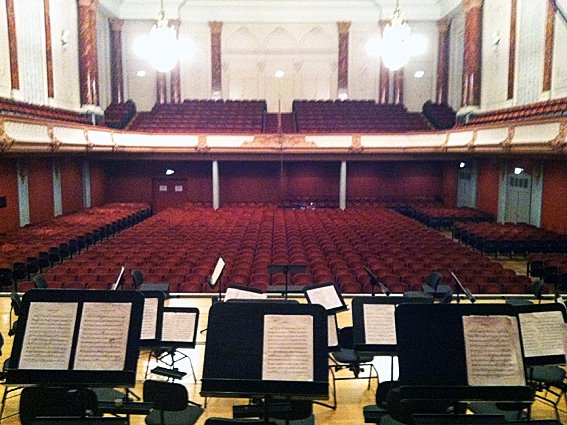
Musicians build up barricades – noise protection in the orchestra pit
Musicians build up barricades – noise protection in the orchestra pit

In order to minimise the health risk for orchestral musicians, noise protection walls made out of Plexiglass are being tested.

Plexiglass Protection

To minimise the health risk for orchestral musicians, the academy of music in Detmold / Germany is testing noise protection walls made out of Plexiglass. In contrast to workers in road construction and industry, the musicians can not wear head phones or ear plugs to protect their ears. The noise level however often exceeds the maximum tolerable limit of 120 decibel – which is louder than an pneumatic hammer or disco music.


Read the complete article here (in German):

https://www.scribd.com/doc/95137022/PDF-Orchestermusiker-schutzen-sich-n-tv  


Burgmuseum Abenberg

endlich mal ein Ritter sein…

Mit einem eigenen Schlüssel können große und kleine Gäste die faszinierende Geschichte der Burg erforschen, in einer virtuellen Ahnengalerie frühere und heutige Bewohner kennenlernen und mittelalterlichen Klängen lauschen.
Der Traum „endlich mal ein Ritter sein“ lässt sich jetzt im Burgmuseum Abenberg erfüllen.

Im neuen Burgmuseum Abenberg werden „1000 Jahre Burgträume“ lebendig. Die Burg ist voller Geheimnisse, die nur darauf warten entdeckt zu werden.

Gleichzeitig erleben Besucherinnen und Besucher die Verbindung der Burggeschichte mit der Stadt, mit der Region und mit der Welt. Sie tauchen ein in eine längst vergangene Zeit, als auf Burg Abenberg echte Ritterturniere stattgefunden haben.

Text: https://www.burg-abenberg.de/#burgmuseum

Dauerausstellung, Impuls-Design, Abenberg

Fotos: David Hartfiel

Virtual Reality im Employer Branding: Wie die Plansee Group ihre Arbeitgebermarke mit einem VR-Rundgang stärkt

„Tauchen Sie ein in die Welt der Plansee Group!“, begrüßt das Tiroler Unternehmen die virtuellen Besucher:innen bei einer 360°-Tour durch das Unternehmen. Dürfen wir vorstellen? Plansee, der Experte für innovative Lösungen aus Molybdän und Wolfram lädt zu einem virtuellen Unternehmensrundgang und setzt damit auf Virtual-Reality-Einblicke, um Employer Branding und das Recruiting auf ein neues Level [...]

Der Beitrag Virtual Reality im Employer Branding: Wie die Plansee Group ihre Arbeitgebermarke mit einem VR-Rundgang stärkt erschien zuerst auf omnia360.